


Last week, we noted that rates had managed to withstand surprisingly strong jobs data, but that inflation could be a tougher test. We also cautioned that further improvement depended heavily on continued trouble in the tech sector. This week brought hotter inflation and a stock market that wasn't nearly troubled enough to offset it.
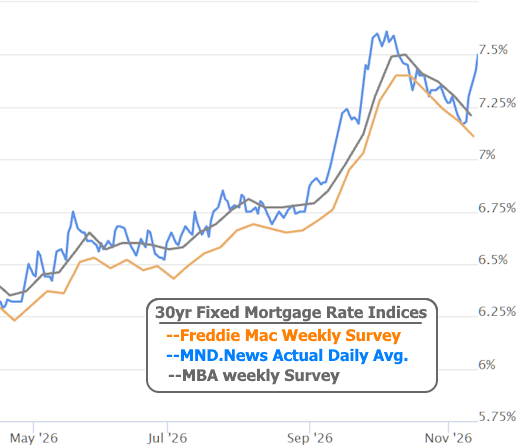
Mortgage rates moved sharply higher, giving back most of the improvement seen since early October. The average top-tier 30yr fixed rate rose nearly a third of a percentage point in just three trading days. Tuesday and Thursday did most of the damage, with Friday adding to the increase.
NOTE: Freddie Mac's weekly rate survey was released on Thursday and it showed sharply LOWER rates. Be aware that this is a lagging indicator based on a trailing 5-day average.
Inflation didn't need to be shocking to cause problems
Tuesday's Consumer Price Index (CPI) was the week's biggest turning point. Core inflation, which excludes food and energy, rose 0.3% in October. That wasn't an extraordinary number on its own, but it was higher than expected and added to concerns that inflation was heading in the wrong direction.
The details didn't offer much reassurance. Price pressures were broad enough that higher fuel costs couldn't explain them away. Nor could everything be chalked up to spending associated with the AI boom. Even categories that improved generally did so from elevated readings in the previous month.
Adding to the problem is the fact that the Fed has made it clear that inflation is its main concern. Before the report even came out, Fed Governor Christopher Waller said a 0.3% core reading could warrant considering a half-point rate hike in December. The data then delivered that reading, and investors quickly raised their expectations for future Fed rates.
Mortgage rates don't have to wait for the Fed to act. The bonds that determine mortgage rates trade throughout the day, allowing investors to respond immediately when the outlook changes. By the time an expected Fed hike actually happens, markets have generally already accounted for it. This week's damage came from the change in expectations about how much hiking might be ahead.
Tech couldn't come to the rescue this time
Recent newsletters have covered how concerns about the AI boom helped bring rates lower. Investors sought safer investments, including bonds, while questioning whether tech spending and borrowing could continue at the same pace. That combination helped push bond yields and mortgage rates down, even when the prevailing economic reports would normally have pushed them higher.
But that support depended on those concerns continuing to intensify. As we noted last week, each additional round of tech selling was already producing a smaller benefit for rates.
This week, tech stocks proved more resilient. Without a fresh wave of concern to support bonds, inflation and the prospect of additional Fed hikes carried more weight. Thursday's sharp increase in bond yields reflected another move higher in Fed rate expectations, reinforced by comments from several Fed officials as well as higher oil prices after Trump said the U.S. didn't need a deal with Iran.
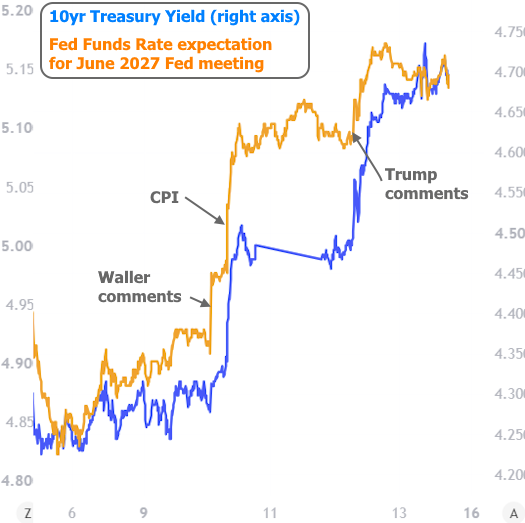
Friday offered little new information to change that picture, but Mortgage rates were still catching up with bond market losses from late Thursday. As a result, Friday saw the highest rates of the week.
What would help rates recover?
The same possibilities remain in play. Renewed trouble in tech could bring investors back toward bonds, while cooler inflation would give the Fed less reason to keep raising rates. Economic reports showing slower growth could help as well.
But if tech holds its ground and inflation remains stubborn, rates will have a harder time recovering. While this week doesn't mean every bit of the recent improvement has to disappear. It does show how quickly that improvement can unravel when the economic data pushes one way and the market's biggest source of support stops pushing back.
